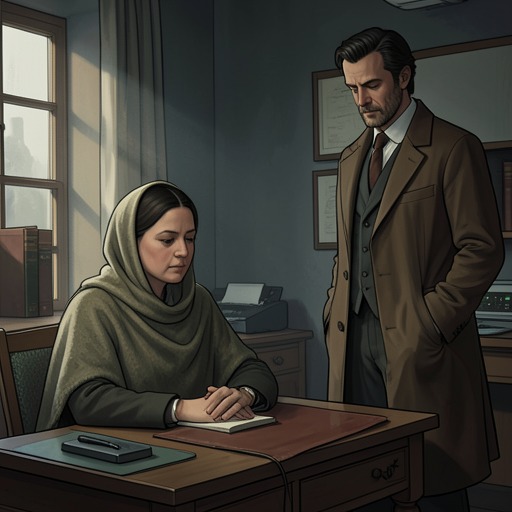
Milicent and Ralph Hattersley's troubled marriage
The Tenant of Wildfell HallMilicent and Ralph Hattersley's troubled marriage is marked by Ralph's reckless dissipation and Milicent's persistent anxiety, which she largely bears in silence. Helen makes the cost of his conduct legible by showing him two of his wife's letters: one written during a period of excess, another during a brief interval of better behavior. Their reunion suggests that the marriage can change when Ralph recognizes what his conduct has done, but the letters also reveal how insecure Milicent remains even when he appears to reform.
A marriage shaped by uncertainty
Milicent's distress is not presented as unhappiness with her children: Helen insists that they bring their mother more pleasure than pain. Rather, she attributes Milicent's suffering to silent fretting over Ralph and to a continuing fear for her own safety. When he behaves well, Milicent can rejoice only with trembling, unable to trust either the duration of his improvement or the judgment and principles on which it rests. When he behaves badly, Helen says, the terror and misery are beyond what anyone but Milicent can know.
This pattern makes the marriage's instability cumulative. A good interval does not restore confidence, because Milicent experiences it as temporary; Ralph's lapses, in turn, make her apprehension more than a response to any single episode. Helen sees that Milicent's endurance has concealed the injury rather than removed it: Ralph has mistaken his wife's silence for indifference.
The letters make private pain visible
Helen decides that she must admonish Ralph rather than let that silence continue to mislead him. She takes him into the library and gives him two letters from Milicent, one dated from London during one of his wildest seasons of reckless dissipation, the other written in the country during a lucid interval. The contrast offers Ralph a record of his conduct from within the marriage, not merely an account of it from someone else.
The London letter is full of trouble and anguish. Milicent does not accuse her husband directly; instead, she regrets his connection with profligate companions, condemns Grimsby and others, and directs some of the blame for Ralph's misconduct toward other men. Her second letter is full of hope and joy, yet its praise of Ralph is tempered by a half-expressed wish that his goodness rest on something more secure than the heart's natural impulses. Its image of a house built on sand proves prophetic: the happiness she welcomes soon collapses. Together, the letters disclose both Milicent's capacity for hope and the fear that keeps that hope from becoming confidence.
Ralph's recognition and response
As Ralph reads, his response is visible in small gestures: he raises a hand to his face, clears his throat, and stares out of the window. After a pause, he returns the letters and silently shakes Helen's hand. He acknowledges that he has been a rascal and promises to make amends. The admission matters because it replaces his previous blindness to Milicent's distress with a recognition of his responsibility for it.
When Milicent arrives with her sister, Ralph goes out to meet her, lifts her from the ground, and greets her with a hearty kiss and a strong embrace. He puts his hands on her shoulders and appears to tell her what he intends to do. Milicent responds by throwing her arms around him and bursting into tears, pleading with him to follow through because, she says, they will then be happy. Her relief is immediate, but the letters' history gives the scene its caution: her happiness has previously been accompanied by a dread that it will not last.
Contrast and significance
The episode makes communication an instrument of moral correction. Milicent's letters had preserved the difference between Ralph's worst periods and his temporary improvement, but their private testimony could not change him while he remained unaware of what his wife endured. Helen's intervention gives those documents a reader and a witness within the story; Ralph's tears and renewed embrace show that the evidence has reached him, though the scene cannot by itself establish that his change will endure.
The marriage also stands beside Helen's own experience of marital constraint. Helen has herself asked to leave with her child and what remains of her fortune, only to be refused both; she has devoted nearly all the income of her fortune for years to come to her husband's affairs. Against that material and emotional entrapment, Ralph's response to Milicent offers a limited, conditional possibility: a husband's recognition may begin to repair a marriage, but Milicent's accumulated fear shows why a declaration of good intentions is not yet security. The episode therefore distinguishes visible reconciliation from the harder work of sustaining trustworthy conduct.